Research preview · Surgical robot vision
SurgURDF-CalibLearning Robust Geometric Optimization for Surgical Robot Camera Calibration
Code
arXiv
Dataset
 Code
Code arXiv
arXiv Dataset
01 Real surgical video02 Projected instrument URDF03 Calibrated overlay
Swipe across to inspect all three views
Observed video on the left, articulated URDF geometry in the center, and the same geometry projected back onto the image after camera calibration on the right.
01 / OVERVIEW
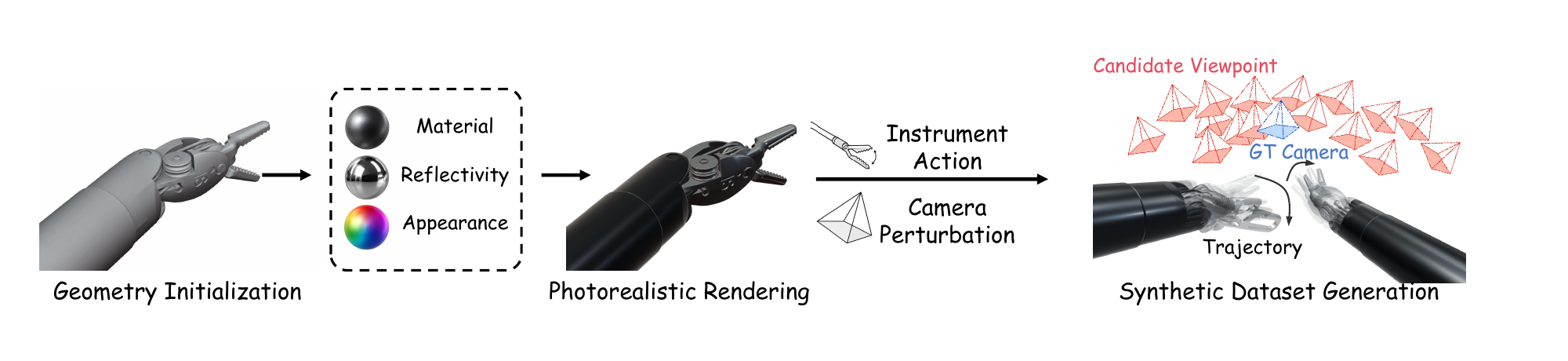
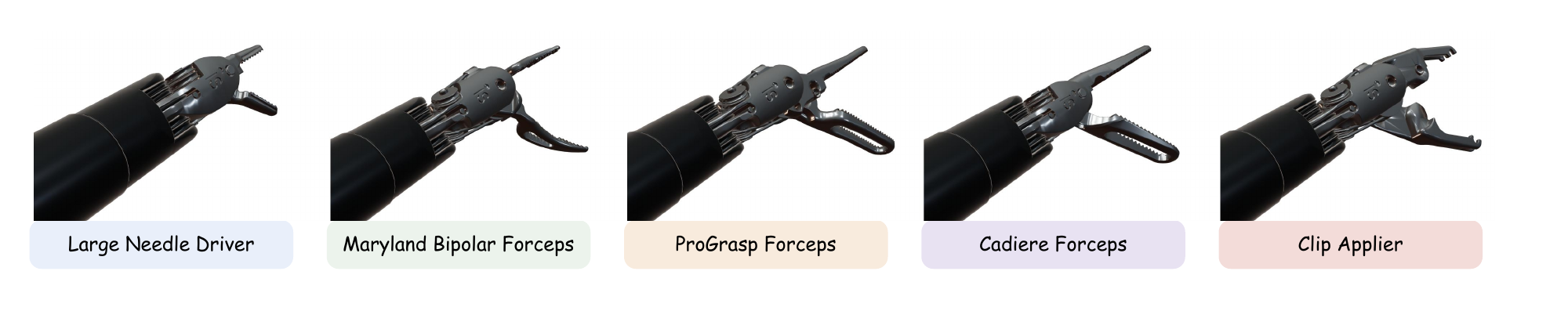
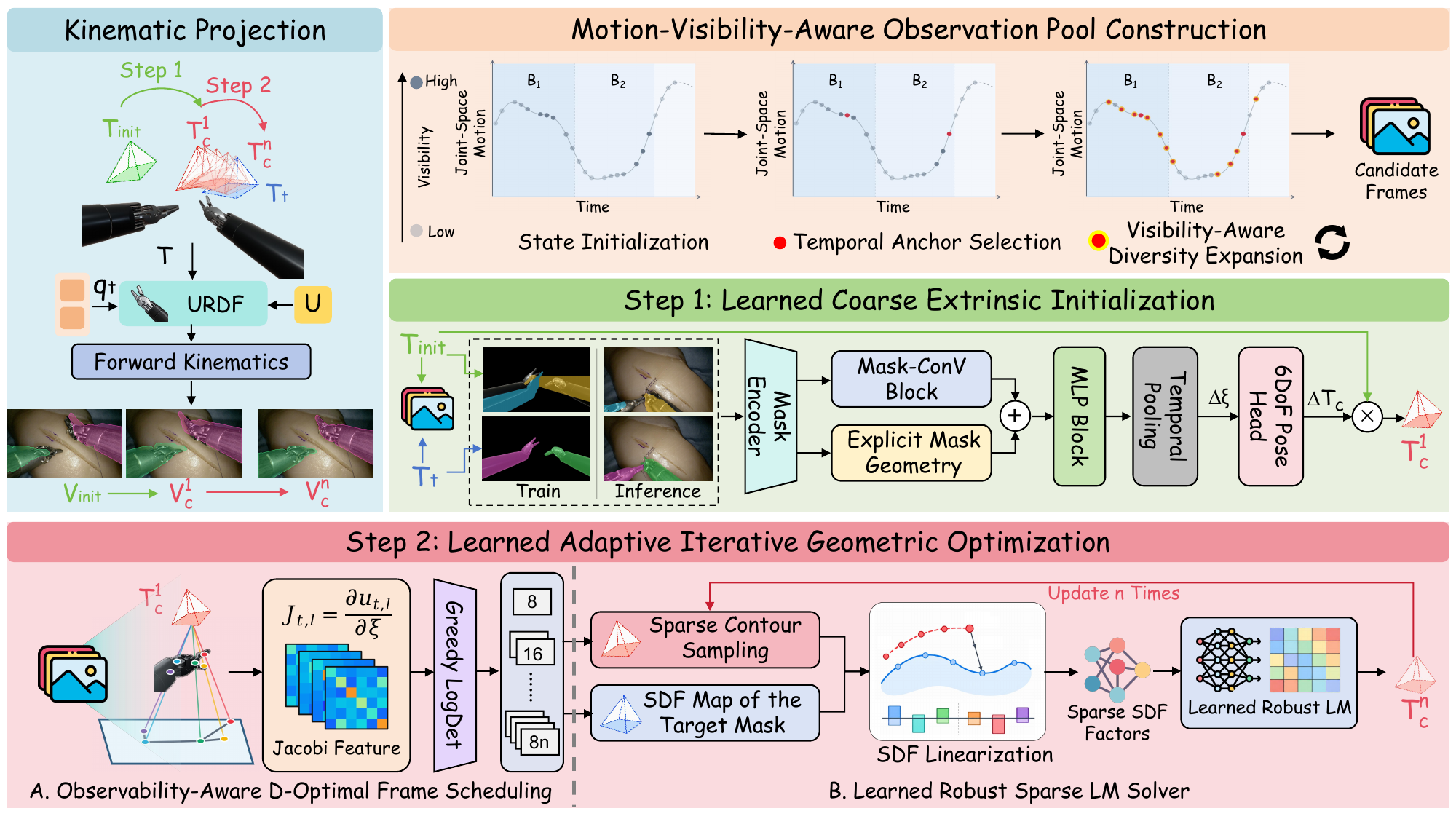
We present SurgURDF-Calib, a geometry-aware learned optimizer for surgical robot–camera calibration that bridges robot kinematics and visual observations through structured geometric reasoning. Instead of directly regressing camera poses, SurgURDF-Calib learns how to select, weight, and optimize geometric constraints while preserving an analytical SE(3) solver. Together with SurgURDF-100K, a large-scale geometry-consistent benchmark with URDF and calibration annotations, our framework enables robust calibration across diverse surgical instruments and real-world environments.
🌟 Key Highlights
- 🔗 Geometry-Structured Optimization
Integrates URDF kinematics, joint states, and visual observations into a unified calibration framework, enabling geometry-consistent camera–robot alignment.
- 🎯 Observability-Aware Frame Scheduling
Selects informative observations from dense surgical videos through D-optimal geometric reasoning, reducing redundant constraints under limited frame budgets.
- ⚙️ Learned Robust Sparse LM Refinement
Learns geometric factor reliability and parameter-wise solver conditioning while preserving an analytical SE(3) optimization process.
- 🦾 SurgURDF-100K Benchmark
Provides 100K geometry-consistent surgical observations with synchronized URDF models, motion states, poses, and camera calibration annotations.
Method
03 / DATASET
SurgURDF-100K